
Sell Diamonds in NYC
Loose stones, engagement rings, estate pieces and certified diamonds, evaluated under the loupe in front of you in the middle of the Diamond District.
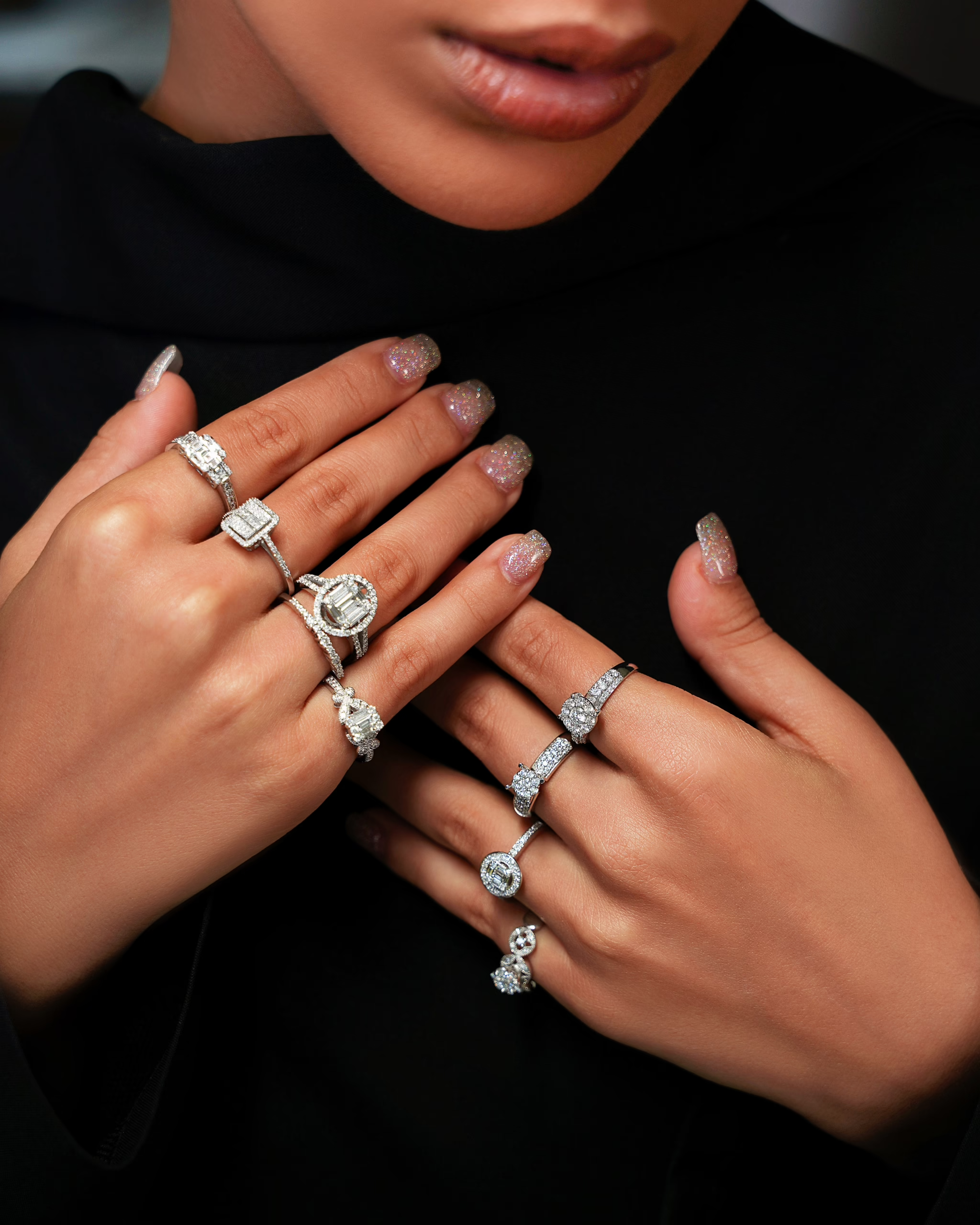
Diamonds are the one category where weight and purity will not give you the answer. Two one-carat stones can differ in value by a factor of five depending on cut quality, colour, clarity and whether the market currently wants that shape. This is appraisal, not arithmetic, which is why it has to happen in person.
We will show you what we are looking at through the loupe and explain what we see. You should leave understanding your stone better than when you arrived, whether or not you sell it to us.
What actually drives the number
Carat weight is only the starting point. Cut quality governs how a stone returns light and moves value more than most sellers expect. Colour runs D through Z and the difference between a G and a J is significant in price and subtle to the naked eye. Clarity covers inclusions and their position. Then there is demand: round brilliants trade more readily than some fancy shapes, and that liquidity shows up in the offer.
Why resale is below retail — plainly
A retail diamond price includes the store's margin, rent, staff, marketing and the cost of holding inventory for months. None of that comes back on resale, for any diamond, at any dealer. An offer that seems low against what was paid is usually an accurate secondary-market number colliding with a retail memory. We would rather explain that clearly than dress it up.
Certificates and what they do
A GIA or AGS report is independent third-party grading and gives both of us a fixed reference, which usually tightens and improves the offer. If you have the report, bring it. If you do not, we grade the stone ourselves in front of you — it simply takes longer. Appraisals from a retail jeweller are insurance replacement documents, not market valuations, and typically state a figure well above what any buyer pays.
Lab-grown versus natural
Lab-grown diamonds are chemically identical to mined ones and cannot be distinguished by eye or loupe. They are worth substantially less on the secondary market and their prices have fallen sharply as production has scaled. We screen for lab-grown as standard, and if that is what you have we will say so directly.
Three steps, one visit.
Walk in or send photos
No appointment during business hours. Photos first if you'd rather have a ballpark before the trip.
We test and weigh it
XRF for purity, certified scale for weight, loupe and certification review for stones — all at the counter.
Take the offer or take it home
We show the math against live spot. Accept and get paid, or walk out with your items. No pressure either way.
Before you come in.
How much can I get for my engagement ring?
It depends on the stone's cut, colour, clarity and carat weight, plus the metal in the setting. The honest answer is that no responsible number can be given without seeing it. Bring the ring and any certificate and you will have a written offer within the visit.
Do I need the GIA certificate to sell?
No, but it helps. A certificate removes the guesswork about grading, which usually means a firmer and better offer. Without one we grade the stone ourselves and explain what we find.
Do you buy diamonds still in the setting?
Yes. Nothing needs to be removed beforehand. We appraise the stone and value the metal separately, then show you both figures so you can see how the total is built.
What about small diamonds and melee?
We buy small stones and parcels. Individually they carry modest value, but in accent settings and tennis bracelets they add up. There is no minimum size.
Will you buy a lab-grown diamond?
We evaluate them, and we will tell you upfront that lab-grown stones bring considerably less than natural ones of the same specifications. If you are not sure which you have, we screen for it as part of the evaluation.