
Sell Gold in NYC
Licensed gold buyers on 47th Street paying cash for gold jewelry, coins, bullion, dental gold and scrap. Purity tested and weighed in front of you, priced off live spot, paid the same visit.
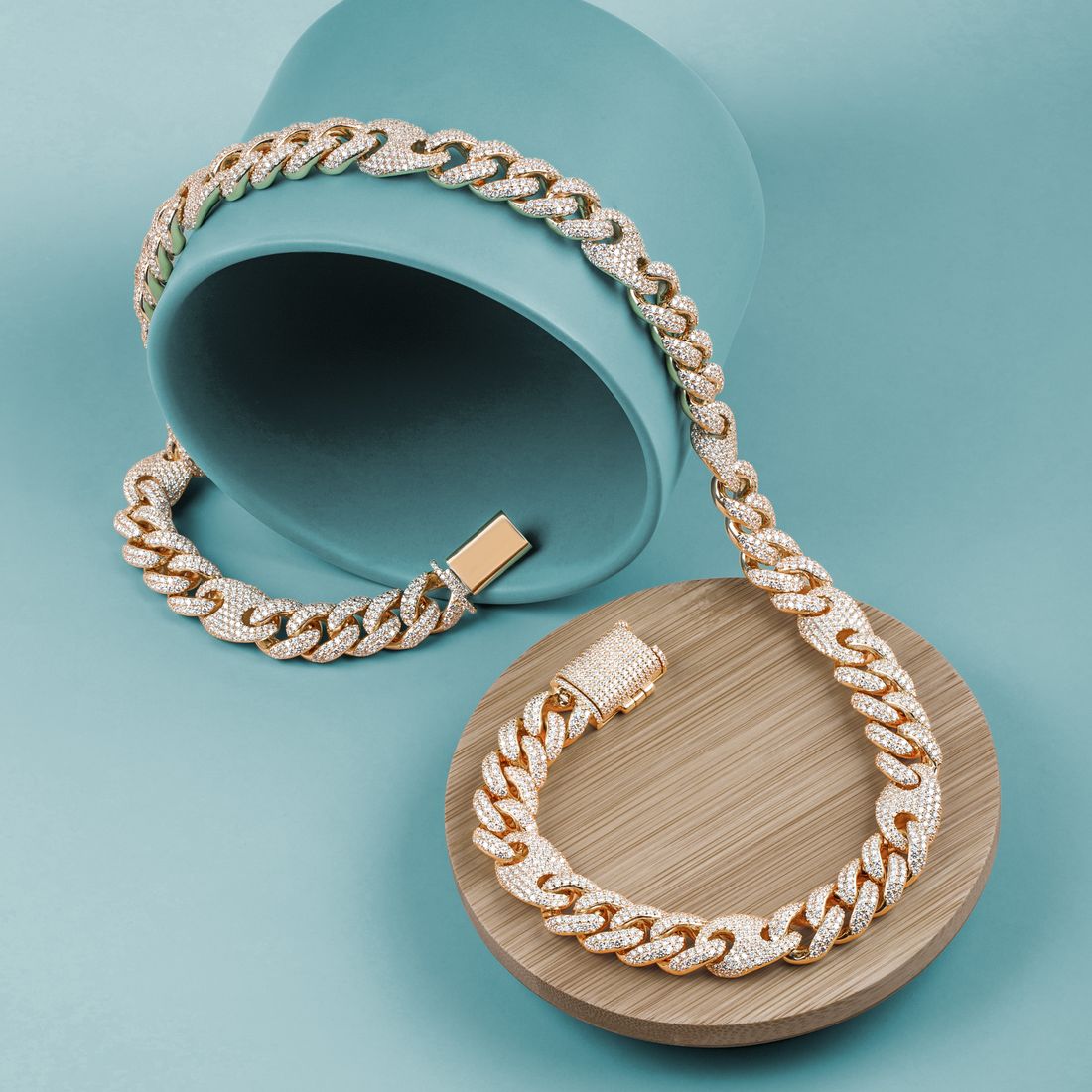
Every honest gold offer in New York City comes down to three numbers: purity, weight, and where spot is trading that day. Multiply them and you have the melt value. That is the entire calculation, and any buyer who will not show it to you is hiding something inside it.
We test purity with XRF rather than an acid scratch, weigh on a certified scale, and show you the arithmetic against the live price on the ticker at the top of this page. If the number does not make sense to you, we would rather walk you through it than have you accept something you do not understand.
What each karat is actually worth
Karat is a purity fraction out of 24. 10K is 41.7% gold, 14K is 58.3%, 18K is 75%, and 22K is 91.7%. A 20-gram 14K chain contains roughly 11.7 grams of pure gold — that gold content is what gets paid on, not the stamped weight. Higher karat means more gold per gram, which is why an 18K piece is worth meaningfully more than a 14K piece of identical size.
Condition does not reduce melt value
A snapped chain weighs what an intact one weighs. Scrap, single earrings, bent bands and dented pieces are all valued on metal content alone, so there is no reason to repair anything before selling and no reason to feel apologetic about the state of what you bring. The one exception runs the other way: signed designer pieces, antique work and stone-set jewelry are sometimes worth more intact than melted, and we will tell you when that is the case.
Coins and bullion price differently
Bullion requires no refining, so it trades much closer to spot than scrap does. Common Eagles and Krugerrands are valued on gold content plus a modest premium. Older, scarcer or graded coins can carry numismatic value well above melt — bring those in rather than treating them as scrap, and bring any grading slabs with them.
What to bring with you
The items and a government-issued photo ID. New York City licenses secondhand dealers through the Department of Consumer and Worker Protection, and recording identification on precious metals purchases is a legal requirement, not a preference. If you have receipts, appraisals or grading certificates, bring those too.
Three steps, one visit.
Walk in or send photos
No appointment during business hours. Photos first if you'd rather have a ballpark before the trip.
We test and weigh it
XRF for purity, certified scale for weight, loupe and certification review for stones — all at the counter.
Take the offer or take it home
We show the math against live spot. Accept and get paid, or walk out with your items. No pressure either way.
Before you come in.
How much is my gold worth per gram?
It depends entirely on karat and the day's spot price. Take the gold content percentage for your karat, multiply by the weight in grams, then multiply by the current per-gram spot price. We do this in front of you on a calculator you can see. Because spot moves daily, a quote from last month is not a quote for today.
Do you buy gold-plated or gold-filled items?
Plated and filled pieces carry a microscopic amount of actual gold, so they almost never have melt value worth paying on. We will test them at no charge and tell you honestly rather than let you make a second trip. Gold-filled is thicker than plated and occasionally worth evaluating in volume.
Can I sell gold without the original receipt?
Yes. A receipt is not required and does not affect the offer on scrap or bullion — melt value comes from the metal, not the paperwork. Receipts and appraisals matter more on designer or antique pieces where we are considering resale value rather than melt.
Is it better to sell gold now or wait?
We are not going to tell you the market is about to move, because nobody knows that. What we can tell you is where spot is right now, what your specific pieces are worth at that price, and that the offer is good that day. Whether to take it is your call, and walking out with your items is a completely normal outcome here.
Do you buy from estates and executors?
Regularly. Estate lots are often mixed — gold, silver, costume, stones — and we sort and price each category separately rather than lumping it. If you are handling an estate and the volume is significant, call ahead and we will make sure the right people are at the counter.