
Platinum vs. White Gold: Why It Matters When You’re Selling
Big difference in pricing
They look almost identical to the naked eye. Both are silver-toned metals used in fine jewelry, often set with diamonds or other stones. But platinum and white gold are entirely different materials with different values, and knowing which one you have is the kind of detail that can change your payout substantially when selling jewelry in New York.
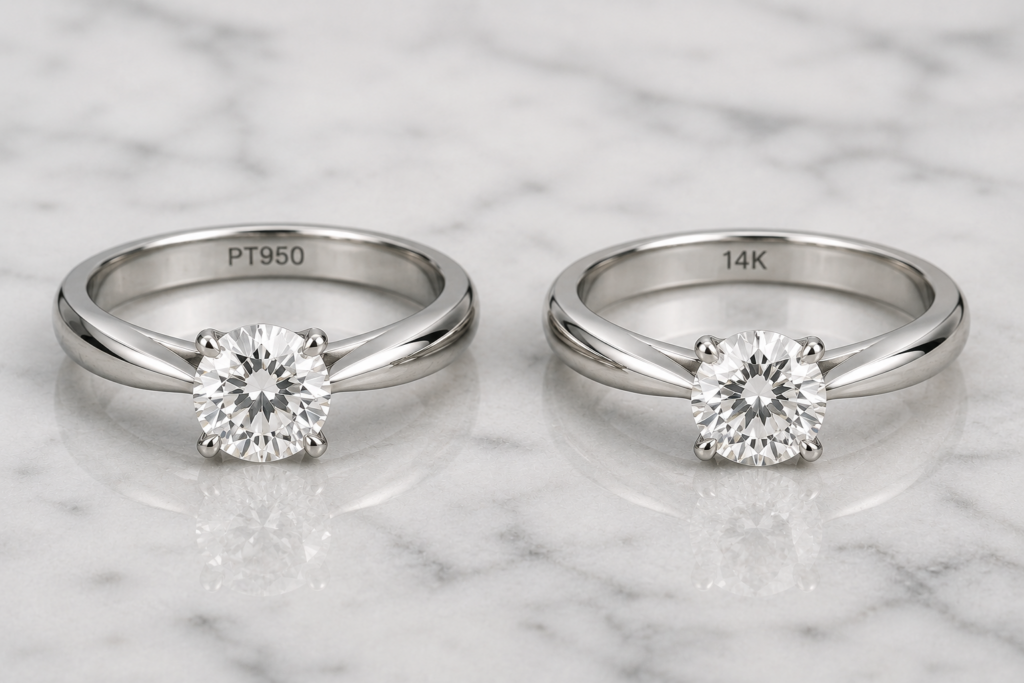
This is a common situation in the Diamond District: someone comes in with a ring they believe is platinum. It was purchased as platinum. It might even have been described as platinum at the time of purchase. But when it’s tested, it turns out to be 14K white gold — a gold alloy that looks the part but is worth significantly less per gram. The reverse is also true, and occasionally someone is pleasantly surprised. Either way, knowing what you actually have is step one.
How to Tell Them Apart Before You Walk In
Start with the stamp. Platinum jewelry is typically marked PT950, PT900, PLAT, or simply 950 (indicating 95% purity). White gold will show a karat stamp — 14K, 18K, or 10K — sometimes followed by a W for white. If your ring says 14K and nothing else, it is white gold, regardless of its color.
Weight is another clue. Platinum is substantially heavier than gold. If two rings of similar size feel noticeably different when you hold them, the heavier one is likely the platinum piece. This isn’t a definitive test, but it’s a useful starting point.
Why the Price Difference Is Significant
Platinum trades at a different spot price than gold, and the metal itself is denser — which means a platinum ring of the same dimensions has more material in it than a gold one. Right now, the relationship between platinum and gold pricing makes this an interesting moment for platinum sellers in particular. The gap between the two metals has narrowed and widened at different points this year, and a specialist buyer who tracks both markets will offer accordingly.
White gold, meanwhile, is valued based on its karat — typically 58.3% gold for 14K, or 75% for 18K — with the remaining percentage made up of alloys like nickel, palladium, or zinc. Those alloys reduce the per-gram value relative to pure gold, which is why karat matters so much in pricing jewelry.
The Role of Rhodium Plating
White gold is frequently rhodium-plated to enhance its brightness and protect against tarnish. Rhodium is itself a precious metal, but the plating is so thin that it doesn’t contribute meaningfully to value. What it can do is obscure stamps and make visual identification harder. A proper test by a buyer goes past the surface — acid testing or XRF analysis evaluates the actual metal underneath.
Getting It Right in the Diamond District
The 47th Street precious metals market has buyers who work with platinum and white gold every day. The Precious Metals Group, at 30 W. 47th Street, tests pieces on-site and explains exactly what they found and how it affects your offer. Whether you’re selling an engagement ring, estate jewelry, or loose pieces, understanding the material is where accurate pricing starts — and that’s where the conversation at a reputable dealer begins.
Don’t guess at what you have. The test takes minutes and eliminates any ambiguity.