
Sell Gold: a Neighborhood-by-neighborhood Guide to Nyc’s Best Buyers
Ready to sell gold? Discover NYC's best buyers in your neighborhood.
If you’re thinking about selling gold in NYC, you already know the city has more jewelry buyers than subway rats. But here’s what most people don’t realize: where you sell matters just as much as what you’re selling. A buyer in Midtown operates differently than one in Brooklyn. The guy in the Diamond District has different overhead costs than someone running a shop in Queens. And those differences show up in your payout.
After two decades in this business, I’ve watched people walk out of appointments leaving hundreds—sometimes thousands—of dollars on the table because they didn’t understand how location shapes value. This isn’t about finding the “best” neighborhood. It’s about understanding what each area brings to the table so you can make a smarter decision about where to take your pieces.
The Diamond District: High Volume, Competitive Rates, But Know What You’re Walking Into
West 47th Street between Fifth and Sixth Avenue is the beating heart of New York’s jewelry trade. More gold changes hands on this single block than in entire cities elsewhere. The concentration of buyers creates real competition, which theoretically should work in your favor.
But here’s the reality: the Diamond District is built for wholesale transactions and professional dealers. The guys working these shops see hundreds of pieces every week. They’re efficient, they’re fast, and they know their numbers cold. That’s good if you have straightforward items—plain gold chains, simple rings, standard pieces where the value is purely in the metal weight.
Where it gets tricky is with anything that has character or history. A vintage piece from the 1940s? An unusual designer item? Something with sentimental backstory that might appeal to collectors? The high-volume nature of Diamond District operations means many buyers are laser-focused on melt value. They’re not set up to evaluate or market pieces that deserve a second look.
I’ve seen people bring in inherited jewelry that tells a story, only to get quoted scrap prices because the buyer has thirty more people waiting. That doesn’t make them dishonest—it’s just how that particular ecosystem works.
The other thing about the Diamond District: it’s overwhelming if you don’t know what you’re doing. You’ll get pulled into shops, hear pitches, see signs promising top dollar. Some of those promises are legitimate. Others are bait. Knowing the difference requires either experience or a healthy dose of skepticism.
Midtown and Upper East Side: Where Established Buyers Meet Established Clientele
Move north or east from the Diamond District and you enter a different world. Buyers in these neighborhoods typically operate by appointment. They’re not fighting for foot traffic. Their overhead is higher—Manhattan rents being what they are—but they’re often working with clients who value expertise over speed.
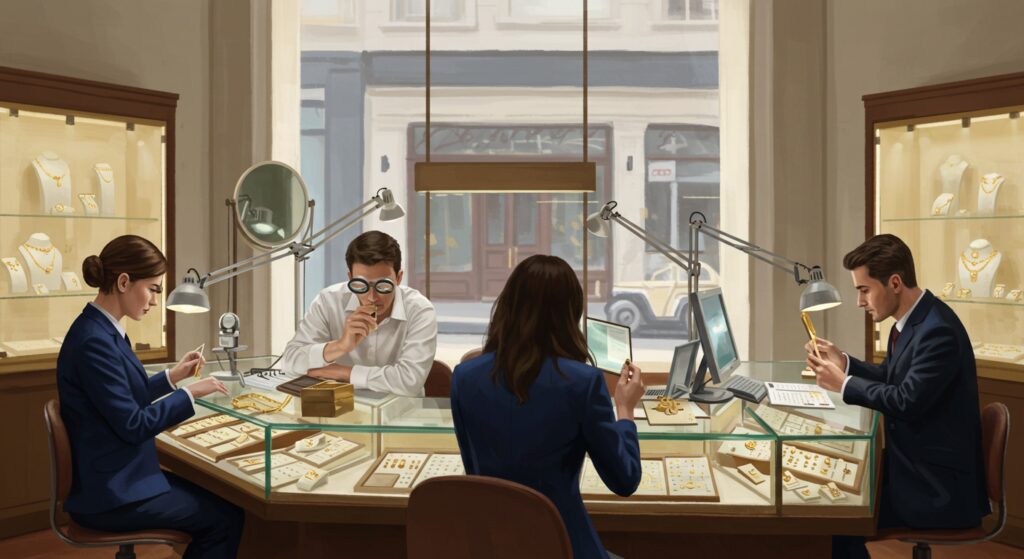
These are the buyers who take time to examine pieces properly. They’ll use a loupe. They’ll test gold purity correctly. They’ll notice if your bracelet is actually 18K instead of 14K, which makes a real difference in value. They’re equipped to handle estate jewelry, designer pieces, and items that might have value beyond their weight in gold.
The Precious Metals Group operates in this space, and I can tell you the clients who find us often mention the same thing: they wanted someone who would actually look at their pieces as more than just metal to melt. When someone brings in their grandmother’s Art Deco bracelet, we’re evaluating craftsmanship, design, market demand for that era. Sometimes the piece is worth more intact than melted. Sometimes it’s not. But you deserve to know the difference.
The trade-off? These buyers might not be the absolute highest payers for basic scrap gold. A simple broken chain might fetch the same or slightly less than you’d get in a high-volume shop. But for anything with potential value beyond melt—vintage pieces, designer items, unusual gemstone combinations—this is where you want to be.
Brooklyn and Queens: The Neighborhood Buyer Advantage
Brooklyn and Queens have seen an explosion of local jewelry buyers over the past decade. These operations run leaner than Manhattan shops. Lower rent means lower overhead, which can translate to better offers on straightforward gold items.
The best neighborhood buyers build their reputation locally. They’re not relying on tourist traffic or one-time transactions. They need repeat business and word-of-mouth referrals from people who live in the area. That creates a different incentive structure. A buyer in Park Slope or Astoria who lowballs you risks having that story spread through the community.
I’ve heard from people who got solid offers from neighborhood buyers on standard gold jewelry—wedding bands, simple chains, everyday pieces where the value is straightforward. The personal touch matters too. You’re more likely to sit down, have a conversation, understand exactly how they’re calculating value.
Where neighborhood buyers sometimes fall short is with unusual or high-value pieces. A local shop might not have the expertise or market connections to properly value a rare Cartier piece or a collection of antique gold coins. They’re excellent for bread-and-butter transactions, less equipped for specialized items.
The other consideration: not all neighborhood buyers are created equal. Some are experienced professionals running legitimate operations. Others are newer to the business or working with limited capital. Ask questions. How long have they been operating? What’s their process for testing gold? Do they provide written documentation of their offer?
What Actually Matters More Than Location
Here’s what I tell people who ask where they should sell: location matters, but it’s not the only factor. The neighborhood gives you context, but the specific buyer makes the deal.
Look for buyers who explain their process clearly. They should test your gold in front of you, show you the purity reading, explain how they’re calculating weight and current market rates. If someone quotes you a number without showing their work, that’s a red flag regardless of what neighborhood you’re in.
Ask about their evaluation process for pieces that might have value beyond melt. Do they consider design, era, maker’s marks? Are they connected to collectors or dealers who might pay premium prices for intact pieces? A good buyer will tell you honestly whether your item is worth more as-is or melted down.
Check their credentials. Legitimate buyers should be licensed and insured. They should provide receipts and documentation. They should give you time to think about their offer without pressure tactics.
And here’s something most people don’t consider: timing. Gold prices fluctuate daily based on global markets. A buyer quoting you Monday’s price on Friday isn’t doing you any favors. Make sure offers are based on current rates.
The neighborhood you choose should match what you’re selling and what you value in the transaction. Need speed and convenience? The Diamond District might be your best bet. Have pieces that deserve careful evaluation? Look for established buyers in Midtown or the Upper East Side. Selling straightforward items and value personal service? A reputable neighborhood buyer could be perfect.
What matters most is finding someone who treats your gold with the respect it deserves—whether that’s a simple chain or a family heirloom that’s traveled through generations. The right buyer will take the time to give you a fair evaluation, explain their reasoning, and let you make an informed decision. That’s true whether you’re on 47th Street or in a quiet shop in Brooklyn.
Frequently Asked Questions About Sell Gold
How do I know if I’m getting a fair price for my gold in NYC?
The best way to ensure you’re getting a fair price is to check the current spot price of gold before visiting any buyer and get quotes from multiple reputable dealers in NYC. Legitimate buyers will test your gold in front of you, explain the karat weight and purity, and show you how they calculate their offer based on the current market price. Be wary of buyers who rush you or refuse to explain their pricing methodology.
What do I need to bring when selling gold in New York City?
You’ll need to bring a valid government-issued photo ID such as a driver’s license or passport, as New York State law requires all gold buyers to record seller information. It’s also helpful to bring any original receipts, certificates of authenticity, or appraisals you have for your gold items, though these aren’t mandatory. If you’re selling estate jewelry or inherited pieces, having documentation can sometimes help establish provenance and value.
Do I have to pay taxes when I sell my gold jewelry in NYC?
In most cases, selling personal gold jewelry is considered a capital gain, and you may owe capital gains tax if you sell the item for more than you originally paid for it. However, many people sell gold jewelry at a loss compared to the original purchase price, which means no tax is owed. It’s advisable to keep records of your transaction and consult with a tax professional, especially if you’re selling significant amounts or high-value pieces.
How long does it take to sell gold and get paid in NYC?
Most reputable gold buyers in NYC will test your gold, make you an offer, and pay you on the spot if you accept—the entire process typically takes 15-30 minutes. Payment is usually made immediately in cash, check, or bank transfer depending on the amount and the buyer’s policies. Some buyers may require a brief waiting period for very large transactions, but same-day payment is standard for most personal gold jewelry sales.
Should I sell my broken or damaged gold jewelry, or is it worth less?
Absolutely sell your broken or damaged gold jewelry—reputable buyers purchase gold based on its weight and purity, not its condition or appearance. Whether your necklace is tangled, your ring is bent, or your earring is missing its pair, the gold content still has value. In fact, many sellers are surprised to learn that broken 14K or 18K gold pieces can be worth several hundred dollars based purely on their melt value.