
Sell Gold: How Your Old Jewelry Can Fund Your Summer Fun
Sell Gold this summer to fund your next adventure!
That broken necklace in your jewelry box isn’t doing you any favors collecting dust. If you’re looking to sell gold in NYC, you’re sitting on more than sentimental memories—you’re holding actual cash that could pay for concert tickets, a weekend getaway, or that restaurant you’ve been wanting to try. The gold market is strong right now, and turning unwanted jewelry into spending money is easier than most people think.
Here’s the thing nobody tells you: the jewelry you never wear has real value, and waiting doesn’t make it worth more. Gold prices fluctuate, but the opportunity cost of keeping broken chains and outdated rings in a drawer is something most people never calculate. Let’s talk about how to turn those forgotten pieces into actual money—and what you need to know before you walk into any buyer’s office.
What Makes Your Old Jewelry Actually Valuable
Most people have no idea what they’re sitting on. That gold bracelet your aunt gave you in 1995? It’s not worth what she paid for it—it’s worth what the gold itself is worth today. And depending on when she bought it, that might actually be significantly more.
The value comes down to three things: weight, purity, and current market price. A chunky 14K gold chain from the 80s might look dated, but it’s heavy, and weight matters. The purity stamp—10K, 14K, 18K, or 24K—tells you how much actual gold is in the piece versus other metals. The higher the number, the more pure gold you have. If you want to understand exactly what those numbers mean, check out our breakdown of gold purity levels.
Here’s what surprises people: broken jewelry is worth the same as intact jewelry when you’re selling for the gold content. That snapped chain? Same value per gram as a perfect one. The clasp doesn’t work? Doesn’t matter. You’re not selling it as jewelry anymore—you’re selling it as gold.
Even small items add up. A single earring, a bent ring, a charm bracelet missing half its charms—bring it all. At The Precious Metals Group in the Diamond District, we’ve had customers shocked to walk out with several hundred dollars from what they thought was junk drawer debris.
The Right Way to Get Paid What Your Gold Is Worth
Walking into the first “We Buy Gold” sign you see is a mistake. Not all buyers are created equal, and the difference between a fair offer and a lowball can be hundreds of dollars on the same pieces.
First, know what you have. Look for stamps inside rings, on clasps, or on the back of pendants. You’re looking for 10K, 14K, 18K, or 24K markings. If you see “925” or “Sterling,” that’s silver, not gold—still valuable, but priced differently. Some pieces might be platinum or white gold, which look similar but have different values.
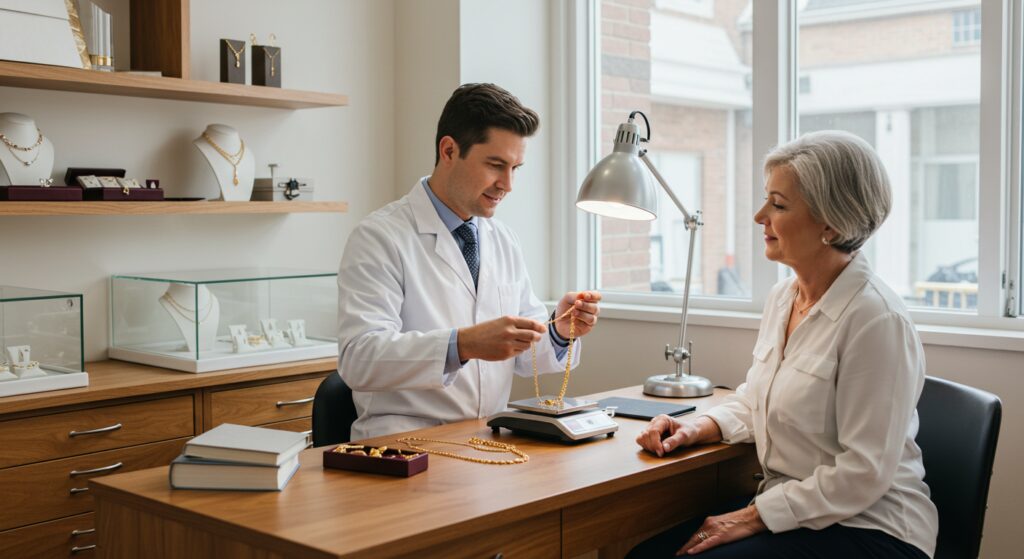
Get multiple quotes. Legitimate buyers won’t pressure you to sell immediately. They’ll test your gold, weigh it in front of you, and explain their offer. If someone rushes you or won’t show you the scale, walk out.
Timing matters, but not the way most people think. Yes, gold prices change daily, but unless you’re selling significant quantities, the day-to-day fluctuations won’t dramatically impact your payout. What matters more is finding a buyer who pays a fair percentage of the actual gold value. Some buyers pay 60-70% of melt value. Better buyers pay 85-90%. That difference is real money.
The Diamond District in Manhattan has the highest concentration of gold buyers in the city, which creates competition—and competition works in your favor. But not every neighborhood buyer is trying to rip you off. We’ve seen honest buyers in every borough. The key is knowing what questions to ask and what red flags to watch for.
What Actually Happens After You Sell
Most people never think about this, but it’s actually interesting. Your old jewelry doesn’t end up in a pawn shop display case. It gets melted down and refined.
The process is straightforward: buyers collect gold from sellers like you, then send it to refineries where it’s melted and purified. The pure gold gets sold to manufacturers who make new jewelry, electronics, or industrial components. Your grandmother’s outdated brooch might end up in a smartphone or a new engagement ring. There’s something satisfying about that—nothing goes to waste.
If you’re curious about the full journey, we wrote about what really happens to gold after you sell it. The recycling process is more sophisticated than most people realize.
This is also why condition doesn’t matter when you’re selling for gold content. Scratched, bent, broken—it’s all getting melted anyway. The only time condition matters is if you have something genuinely antique or from a famous designer. In those cases, you might get more selling it as a collectible piece rather than for its gold weight. But that’s rare. Most jewelry is worth more as raw material.
The Mistakes That Cost Sellers Money
The biggest mistake? Assuming all gold jewelry is the same purity. People bring in a pile of mixed items—some 10K, some 14K, maybe a piece of 18K—and expect one price. Buyers should separate and price each purity level differently. If they don’t, you’re probably getting underpaid on the higher-karat pieces.
Second mistake: not removing stones before selling. If you have diamonds or gemstones in your gold jewelry, many buyers will just pay you for the gold weight and keep the stones. Depending on the stones, you might be leaving money on the table. Ask if they’ll pay separately for any diamonds or if you should have them removed first.
Third mistake: selling everything at once without testing the buyer. If you have a lot of gold, sell one or two small pieces first. See how they treat you, check their prices against other buyers, then come back for the rest if they’re fair. This is especially important if you’re dealing with inherited jewelry where you might not know exactly what you have.
Don’t fall for the “gold party” scam. These are events where someone hosts a party and a buyer comes to purchase everyone’s gold. The social pressure to sell, combined with not being able to get competing offers, usually means terrible prices. Sell on your own terms, in a professional setting, where you can walk away if the offer isn’t right.
And here’s one people don’t think about: clean your jewelry before bringing it in. Not because it affects the value, but because it affects perception. A buyer looking at grimy, tarnished pieces might unconsciously offer less than they would for clean items, even though the gold content is identical. Wipe things down, make them presentable. It takes five minutes and might make a psychological difference.
Why Now Makes Sense
Gold prices in 2026 are being driven by factors that aren’t going away quickly—central bank buying, economic uncertainty, and industrial demand. We covered the specific drivers of current gold prices in detail, but the short version is this: the market is strong, and waiting for some magical peak is a gamble.
More practically, if you need money now for something specific—a vacation, home repairs, paying down debt—the gold in your drawer is doing
Frequently Asked Questions About Sell Gold
How do I know if I’m getting a fair price for my gold in NYC?
The best way to ensure you’re getting a fair price is to check the current spot price of gold before visiting a buyer and get quotes from at least 2-3 reputable dealers. Legitimate buyers in NYC will weigh your gold in front of you, test its purity, and offer a percentage of the current market value based on karat weight. Be wary of buyers who won’t explain their pricing or rush you into a sale.
What do I need to bring when selling gold in New York City?
You must bring a valid government-issued photo ID such as a driver’s license, passport, or state ID card—this is required by law in New York. It’s also helpful to bring any original receipts, certificates of authenticity, or appraisals you have for your gold items. If you’re selling estate jewelry or inherited pieces, any documentation about the items can help establish their value and history.
Do gold buyers in NYC test my jewelry, and what methods do they use?
Reputable NYC gold buyers will test your items to verify purity, typically using acid testing, electronic testing, or X-ray fluorescence (XRF) technology. Acid testing involves applying small amounts of acid to determine karat weight, while XRF machines provide non-destructive analysis. Professional buyers should perform these tests in front of you and explain the results, showing you exactly what karat your gold is before making an offer.
Should I sell my broken or damaged gold jewelry, or is it worth less?
Absolutely sell your broken or damaged gold jewelry—most buyers purchase gold based on its metal content and weight, not its condition. Broken chains, single earrings, bent rings, and outdated styles all have the same value per gram as perfect pieces of the same karat. In fact, many people are surprised to learn that their old, unwanted gold sitting in drawers can be converted to immediate cash regardless of its condition.
How quickly can I get paid when selling gold in NYC?
Most reputable gold buyers in NYC offer immediate payment once you accept their offer, typically providing cash, check, or bank transfer on the spot. The entire process—from evaluation and testing to receiving payment—usually takes 15-30 minutes. Some buyers may offer higher prices if you’re willing to wait for a mailed check, but immediate payment is standard practice at established NYC gold buying locations.