
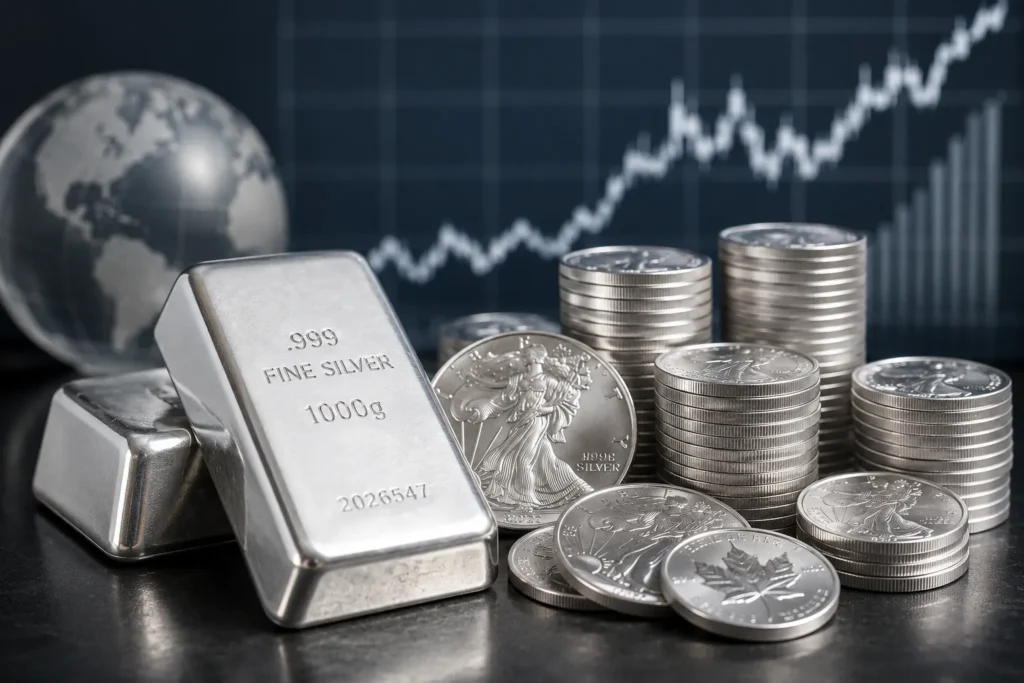
Thinking of selling silver in NYC?
Gold gets the headlines, but silver has quietly become one of the more interesting stories in the precious metals market this summer. If you have sterling flatware packed away from an estate, old coin rolls in a filing cabinet, or a collection of .925 jewelry you never wear, the current landscape for selling silver in New York is worth paying attention to.
Unlike gold, silver serves a dual role. It’s both a monetary metal and an industrial one — used heavily in solar panels, electronics, and medical applications. That industrial demand component gives it a different kind of price support than gold has, and it’s been one of the factors keeping values elevated even through periods of broader market uncertainty.
What “Sterling” Actually Means When You Sell
Sterling silver is 92.5% pure — that’s where the .925 stamp comes from. Fine silver is 99.9% pure. Coin silver, common in older American flatware and coins minted before 1965, is typically 90% pure. Each has a different melt value, and that calculation is where your payout begins.
The key word there is begins. A piece with significant weight, excellent condition, or maker’s marks from a notable silversmith may be worth more than melt. This is why it pays to bring items to someone who actually knows the market, not just a scrap buyer who will offer you a flat rate per ounce and move on.
Estate Flatware: The Most Misunderstood Category
Every few weeks, someone walks into a precious metals buyer on 47th Street with a full set of grandma’s silver flatware — 12 place settings, the serving pieces, the whole thing — and is surprised to learn how much it actually weighs. Silver is dense. A good set can run 80, 100, even 120 troy ounces or more. At current market prices, that’s real money.
The opposite surprise also happens. Some flatware that looks silver is actually silverplate — a base metal with a thin silver coating that has no meaningful scrap value. A proper test takes 30 seconds and removes all ambiguity. If you don’t know what you have, get it tested before you make any assumptions about what it’s worth.
Silver Coins: A Category of Their Own
Pre-1965 U.S. dimes, quarters, half dollars, and dollars are 90% silver. These are commonly called “junk silver” — a misleading term because they have genuine melt value that fluctuates with the spot price. Rolls of these coins, bags of them, or even individual pieces tucked away in an old change jar are worth having evaluated. Certain dates and mint marks also carry numismatic premiums on top of melt value, which is another reason a specialist is the right call.
Getting a Fair Price in New York
New York is one of the best cities in the country to sell precious metals because competition among buyers is real. The Diamond District has multiple dealers operating within a few blocks of each other, which keeps offers honest. The Precious Metals Group at 30 W. 47th Street buys sterling silver, fine silver, silver coins, and silverplate evaluations at no charge — you find out quickly what you have and what it’s worth. No pressure, no mystery pricing.
If silver has been sitting in storage taking up space, this summer is a fine time to convert it into something more useful. The market is cooperating.