
How to Choose the Right Jewelry Buyer: Key Decision Factors
This article outlines essential criteria for selecting a jewelry buyer.
What Separates a Serious Buyer from a Bad Deal
Most people selling jewelry make the same mistake: they treat all buyers as roughly equal and choose based on convenience or whoever quotes first. That is how you leave real money on the table. The actual decision comes down to a short list of factors, and only one or two of them are obvious before you walk in the door.
Start with licensing and verifiability. In NYC, second-hand dealers are required to hold a valid Secondhand Dealer General license issued by the NYPD. Ask for it. A legitimate buyer will show you without hesitation. If someone deflects or says it is not relevant to your transaction, walk out. This is not a formality. It is the baseline that separates a real business from a cash-in-hand operation with no accountability.
Beyond licensing, ask how long the buyer has been operating at the same address. Longevity matters in this industry. Anyone can open a pop-up gold-buying booth. Staying at the same location for years, building a client base, and maintaining a reputation in a competitive market like New York City means something different entirely.
Does the buyer specialize, or do they buy everything?
Specialization directly affects the offer you receive. A buyer who focuses on precious metals and fine jewelry has current market knowledge, calibrated equipment, and relationships with refiners and wholesalers that a generalist pawnshop does not. The Precious Metals Group works specifically in this space, and that focus means their assessments of gold, platinum, diamonds, and silver are based on daily market activity, not guesswork.
How do you know if a price offer is fair?
Get at least two offers before accepting anything. Spot prices for gold and silver are publicly available in real time, so you can walk in knowing roughly what the metal content of your piece is worth at melt value. A reputable buyer will explain how they arrived at their number: metal weight, purity, current market rates, and any premium for designer pieces or intact stones. If the explanation is vague or the buyer refuses to show their math, that is a problem.
The Precious Metals Group tells clients plainly that melt value is the floor, not the ceiling. A signed piece by a recognized maker, a stone with a GIA certificate, or an intact vintage watch can command significantly more than raw metal value. Buyers who do not account for these factors are not giving you a complete assessment.
What the Evaluation Process Should Actually Look Like
A proper evaluation takes time. Not hours, but more than two minutes. The buyer should use a calibrated scale, a precious metal testing system (XRF analysis is the standard for serious operations), and a loupe or microscope for stones. If someone eyeballs your piece and quotes a price immediately, they are either very experienced or cutting corners. Ask which one it is.
For items with diamonds or colored stones, the evaluation should include an assessment of cut, clarity, and carat weight, not just a glance. If you have paperwork, bring it. Certificates from GIA, AGS, or similar labs give the buyer more to work with and often result in a stronger offer. You can learn more about what this process looks like for selling diamonds in NYC before you go in.
Should you sell gold bars and coins the same way as jewelry?
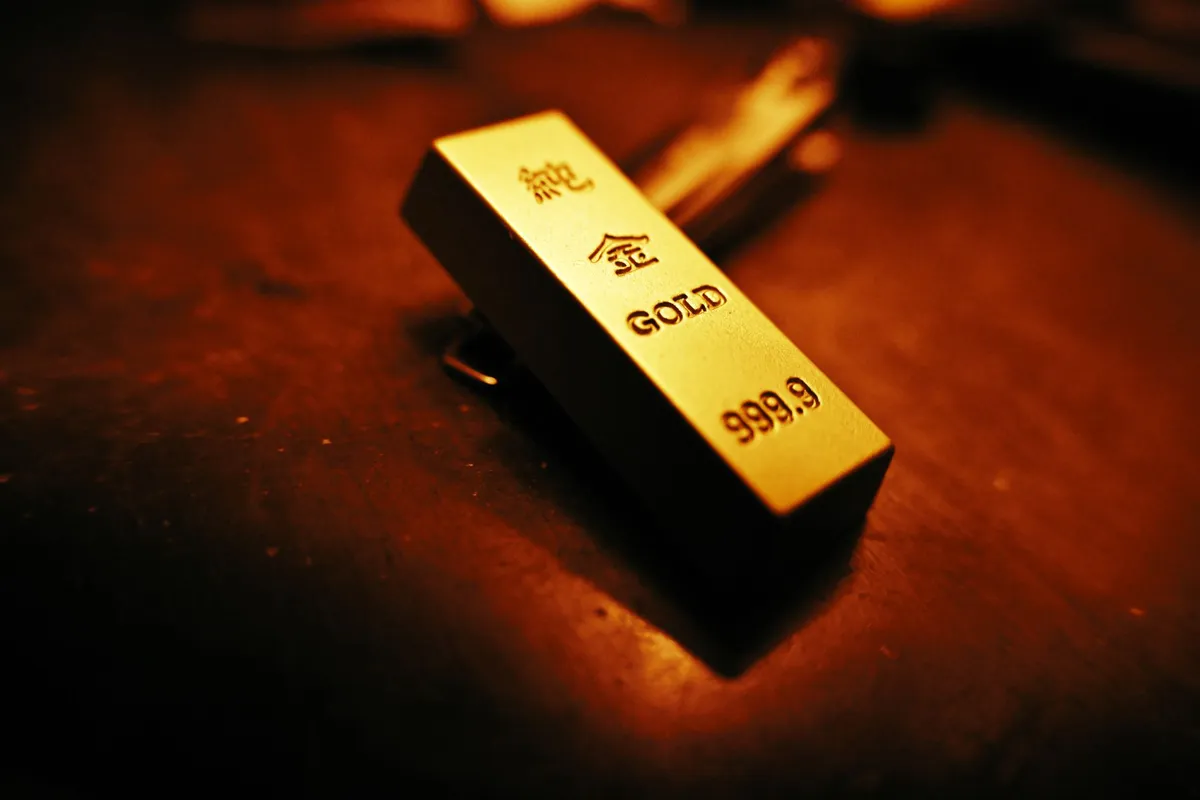
Not always. Raw investment-grade metal, including bullion in bar or coin form, is evaluated differently from fabricated jewelry. Purity is usually stamped and verifiable, weight is straightforward, and the transaction moves faster. But you still need a buyer with direct refiner relationships to get a competitive return. A buyer who has to send your metal out to a third party before quoting you is adding a margin that comes out of your pocket.
For silver specifically, the spread between spot and offer can be wider than with gold, so the buyer’s refiner network matters even more. The sell silver NYC process benefits from a buyer who handles volume and can absorb large quantities without discounting heavily.
Red Flags That Are Easy to Miss
Pressure is the clearest warning sign. Any buyer who tells you the offer expires in the next ten minutes, or that prices are dropping fast so you should decide now, is using a sales tactic. Spot prices move, but not so fast that a legitimate offer evaporates in an hour.
Watch for buyers who refuse to return your items if you decline. In New York City, you are under no obligation to sell after an evaluation. A professional buyer understands this. The Precious Metals Group operates on the straightforward principle that a no-pressure evaluation builds more long-term business than a pressured close, and that approach is visible in how they handle every appointment.
In neighborhoods with high foot traffic, like Koreatown or the Diamond District, you will find a wide range of buyers operating within a few blocks of each other. Proximity does not imply equivalence. The shop with the loudest signage is not necessarily offering the best price or the most transparent process.
What documents should you bring when selling jewelry?
Bring any certificates, original receipts, appraisals, or provenance documents you have. None of these are required to sell, but each one can support a higher offer. A government-issued ID is required by law in New York City for secondhand transactions. Bring that without fail.
Paying Attention to How Payment Works
Ask before the evaluation how you will be paid. Check, wire transfer, and cash are all common. Large transactions are often handled by check or wire for documentation purposes. If a buyer insists on cash only for a high-value item and discourages any paper trail, treat that as a serious concern. Legitimate buyers have no reason to avoid documentation.
Turnaround also matters. Some buyers need to send items to a refiner before they can pay. Others pay on the spot. Know which one you are dealing with before you hand anything over.
The Precious Metals Group is located at 30 W 47th St Suite 906, 9th Floor, New York, NY 10036, and can be reached at (212) 840-0415. For anyone in NYC looking to sell jewelry, precious metals, or related items with a straightforward and documented process, they are a well-established resource with a long track record in the industry.
Frequently Asked Questions
What should I bring when selling my jewelry?
Bring any certificates, original receipts, appraisals, or provenance documents you have, as these can support a higher offer. A government-issued ID is also required by law in New York City for secondhand transactions, so don’t forget that.
How can I ensure I’m getting a fair price for my jewelry?
To get a fair price, obtain at least two offers before accepting anything. A reputable buyer will explain their offer based on metal weight, purity, current market rates, and any premiums for designer pieces or intact stones.
What red flags should I watch out for when choosing a jewelry buyer?
Be cautious of buyers who pressure you to make a quick decision or refuse to return your items if you decline their offer. Legitimate buyers will not use tactics that create urgency and will respect your right to consider your options.
How does the evaluation process work when selling jewelry?
A proper evaluation should take more than just a couple of minutes and involve calibrated scales and precious metal testing systems. Buyers should assess the piece thoroughly, including factors like cut, clarity, and carat weight for stones, rather than just giving an immediate price.
Get Directions to The Precious Metals Group
🎧 Listen to this as a podcast
Also on Apple Podcasts, Spotify, and Amazon Music.
The Precious Metals Group buys gold, silver, platinum, diamonds and luxury watches at 30 W 47th St, Suite 906, in the Diamond District — walk-ins weekdays 10am to 6pm. See what we pay for gold.