
Factors That Determine Jewelry Value in the Gold Trade
Explore the key factors that influence how jewelry is valued and priced in the gold trade.

Most people selling jewelry focus on one number: the spot price of gold. That number matters, but it explains only part of what a buyer actually pays. Purity, weight, form, maker, condition, and market timing all pull the final offer in different directions, sometimes dramatically. Understanding how those factors interact is what separates sellers who walk away satisfied from those who feel shortchanged after the transaction.
Purity and Weight: The Starting Point, Not the Whole Story
How does gold purity affect what a buyer will pay?
Purity is the single largest multiplier on any gold piece’s melt value. A 24-karat item is essentially pure gold. A 10-karat piece is only 41.7% gold by weight, with the remainder being base metals that carry almost no recovery value. The spread between 10k and 18k is not just a marketing distinction; it translates directly into cents-per-gram differences that add up fast on heavier pieces.
Buyers test purity several ways. Acid testing is fast and inexpensive. X-ray fluorescence (XRF) scanning is more precise and non-destructive, reading the alloy composition without scratching the piece. The Precious Metals Group uses XRF analysis as a standard step, because acid testing alone can misread plated items or unusual alloys. Getting that number right protects both sides of the transaction.
Does the weight of a piece always determine its value?
Weight is necessary but not sufficient. A heavy chain with a low karat stamp yields less per gram than a lighter bracelet stamped 18k. Buyers weigh in troy ounces, not standard ounces. One troy ounce equals roughly 31.1 grams. Sellers often underestimate how much this unit difference matters when they compare quotes across buyers who may not be using the same measurement system transparently.
Hollow pieces are another complication. A hollow gold bangle can look substantial and still weigh very little. Filled or gold-plated items weigh more than their gold content justifies. An experienced buyer identifies these quickly; a seller who does not know the difference may be surprised by a lower-than-expected offer.
Form and Fabrication: Why Melt Value Is Not Always the Right Benchmark
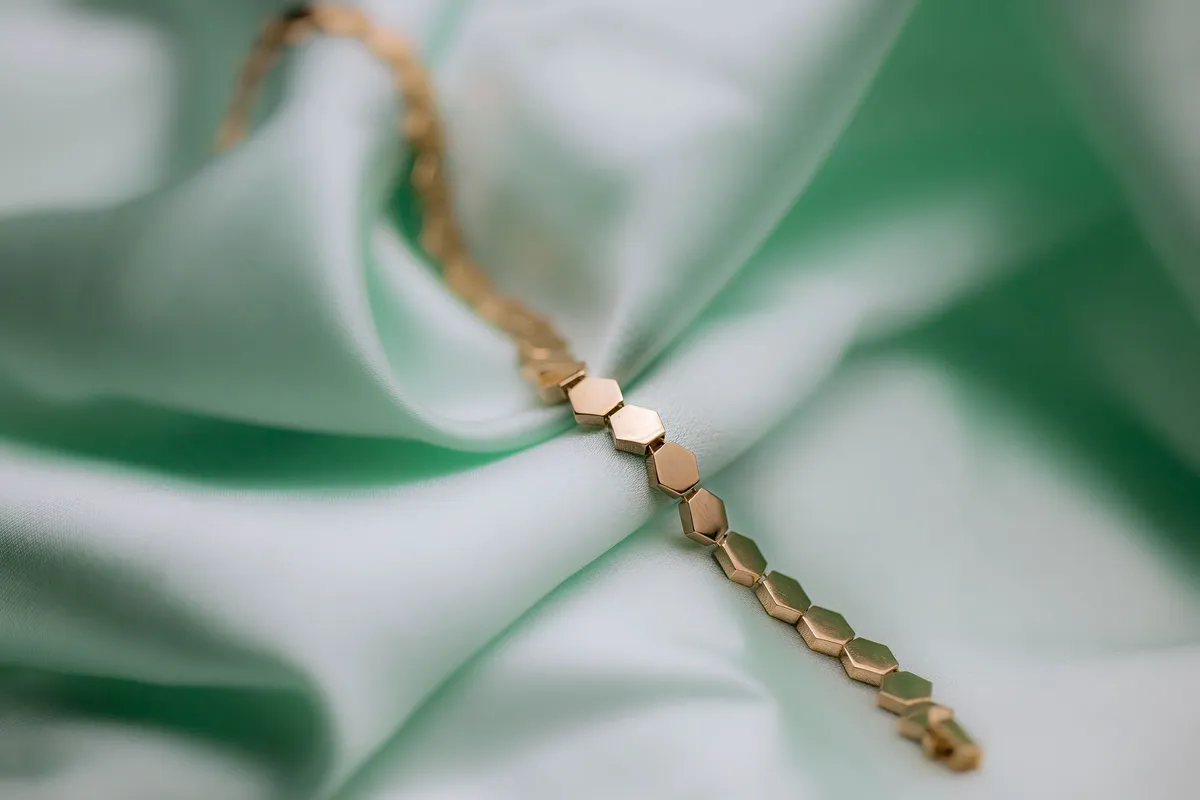
Can jewelry be worth more than its gold content alone?
Absolutely, and this is where many sellers leave money on the table by accepting a melt-value offer on something that commands a premium intact. Signed pieces from recognized makers, antique jewelry with documented provenance, and high-quality diamond-set pieces all carry value beyond the metal. The Precious Metals Group consistently advises clients to identify whether a piece has collector or resale value before agreeing to any offer based purely on weight and purity.
A plain gold band and a mid-century brooch from a known American jeweler may weigh the same. Their outcomes in the secondary market are completely different. Buyers who specialize in precious metals and have relationships across the NYC jewelry district, including the 47th Street corridor, can often route a piece to its highest-value channel rather than defaulting to the melt.
If you are considering selling gold in NYCunderstanding this distinction before you walk in can meaningfully change the outcome.
What role does condition play in a jewelry buyer’s offer?
Condition matters more for resale-grade pieces than for melt-grade ones. A scratched, broken, or heavily worn piece headed to the refiner loses nothing from its gold content because of surface damage. But a piece that might otherwise sell intact to a collector or estate dealer takes a real hit from missing stones, broken clasps, or deep gouges. The Precious Metals Group sees this constantly with estate lots: a set of cufflinks in excellent shape brings a meaningfully higher offer than an identical pair with bent posts and cloudy stones, even when the gold weight is the same.
Market Conditions and the Spot Price Relationship
Gold prices move continuously on global commodity markets, driven by interest rate expectations, currency fluctuations, and macroeconomic uncertainty. Buyers in the gold trade price their offers as a percentage of spot, typically in a range that reflects their own refining costs, overhead, and margin. That percentage varies by buyer type. Refiners, pawnshops, estate dealers, and specialist precious metal buyers all operate at different points on that range.
The practical takeaway: a higher spot price does not guarantee a proportionally higher offer if the buyer’s percentage is low. A buyer offering 60% of melt value during a high spot environment may net you less than a buyer offering 80% during a period when prices are lower. Always ask what percentage of spot the offer represents, not just the dollar amount. That single question cuts through a lot of confusion.
NYC buyers who handle significant volume, particularly in areas like Murray Hill and Midtown where estate and consignment activity is high, tend to offer more competitive percentages because their refining relationships are direct and their overhead per transaction is lower.
For those holding silver, platinum, or mixed-metal lots alongside gold, the same percentage-of-spot logic applies. You can learn more about the process for selling precious metals in NYC to understand how different metal types are evaluated together.
Documentation, Stamps, and What Happens Without Them
A clear karat stamp speeds up the evaluation and often supports a stronger offer. Stamps like 750 (18k), 585 (14k), or 417 (10k) are internationally recognized. European hallmarks follow a different system but are equally readable to an experienced buyer. No stamp does not automatically mean low value; it means the buyer must test before quoting, which adds a step and occasionally results in a more conservative initial offer while testing is completed.
Receipts, appraisals, and certificates matter mostly for diamonds and signed pieces, not for plain gold. A GIA certificate for a center stone, for example, allows a buyer to price the stone accurately rather than estimating. Without it, the buyer discounts for uncertainty. That discount comes out of the seller’s pocket.
Provenance documentation for antique or estate pieces can shift a piece from the melt pile to the collector market entirely. A single invoice connecting a brooch to a known jeweler or period can double the offer. It is worth searching for paperwork before bringing anything in.
The Precious Metals Group operates out of 30 W 47th St Suite 906, 9th Floor, New York, NY 10036, and serves clients across the NYC area as a trusted resource for jewelry evaluation and buying. Reach them directly at (212) 840-0415.
Frequently Asked Questions
What factors affect the value of my jewelry when selling?
The value of your jewelry is influenced by several factors including purity, weight, condition, and market timing. For example, a higher karat piece will generally yield a better offer, but the overall condition and potential collector value can also significantly impact what you receive.
How do I prepare my jewelry for evaluation?
To prepare your jewelry for evaluation, ensure you have any available documentation such as receipts, appraisals, or certificates, especially for diamonds or signed pieces. If your jewelry has a clear karat stamp, it can speed up the evaluation process and potentially support a stronger offer.
What should I be cautious about when selling my jewelry?
Be cautious of accepting offers based solely on melt value without considering potential collector or resale value. Additionally, be aware that buyers may offer lower prices for items without clear stamps, as they will need to test the purity, which can add time and uncertainty to the transaction.
What common mistakes do sellers make when selling gold jewelry?
A common mistake is underestimating the importance of jewelry condition; a well-maintained piece can command a higher price than a similar item in poor condition. Sellers also often overlook the impact of market timing and the percentage of spot price offered by buyers, which can vary significantly.
Get Directions to The Precious Metals Group
🎧 Listen to this as a podcast
Also on Apple Podcasts, Spotify, and Amazon Music.
The Precious Metals Group buys gold, silver, platinum, diamonds and luxury watches at 30 W 47th St, Suite 906, in the Diamond District — walk-ins weekdays 10am to 6pm. See what we pay for gold.