
Sell Gold: Uncover the True Value of Your Jewelry This Summer
Sell Gold this summer and uncover the hidden treasures in your jewelry collection!
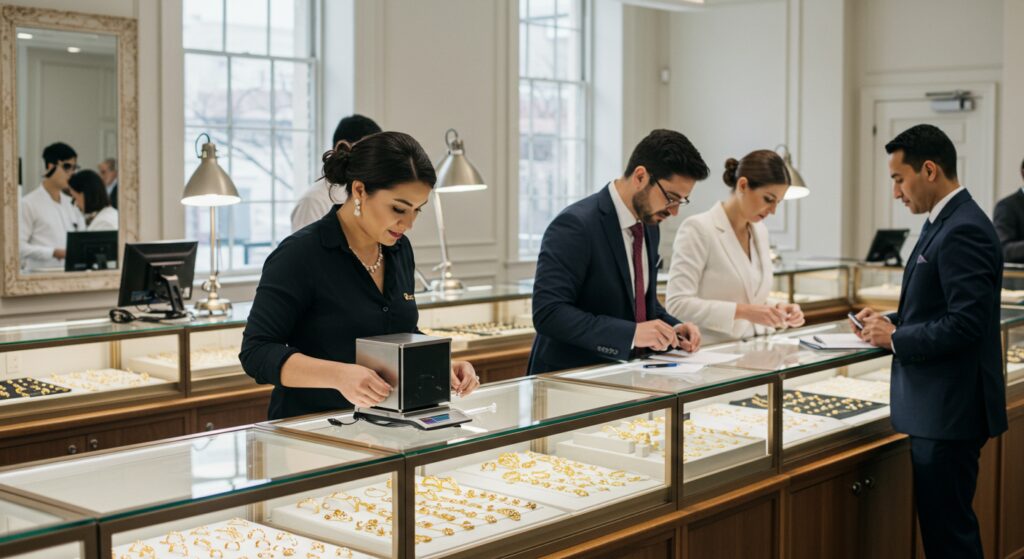
If you’ve been thinking about how to sell gold in NYC and actually walk away feeling good about the deal, there’s a gap between what most people expect and what actually happens at the counter. After two decades in this business, the patterns are clear — sellers who do their homework get paid more. It’s that simple. And the ones who don’t? They leave money on the table, sometimes a lot of it.
Your Gold Is Worth More Than You Think — But Not for the Reasons You’ve Heard
Most people assume the value of a gold piece lives entirely in its weight. Step on a scale, multiply by the spot price, done. But that’s only part of the picture. Karat purity matters just as much as weight, and the two work together in ways that catch sellers off guard.
A heavy 10-karat bracelet can actually yield less cash than a lighter 18-karat ring, because 18-karat gold is 75% pure while 10-karat sits at just 41.7%. Buyers calculate value based on the actual gold content — not the total weight of the piece. So when you’re sorting through what you have, look for the hallmarks stamped inside rings or on clasps. Those tiny numbers — 10K, 14K, 18K, 750, 585 — tell the real story.
Condition matters too, but maybe not in the way you’d expect. A scratched or broken piece of gold jewelry carries nearly the same melt value as a pristine one. Gold doesn’t lose its intrinsic worth because it’s dented. That’s actually good news for anyone sitting on a tangled mess of old chains or a ring that lost its stone years ago. Don’t throw anything out before getting it appraised.
The Mistake That Costs Sellers the Most
Walking into the first buyer you find and accepting the first offer you receive. That’s it. That’s the mistake.
New York City has no shortage of places willing to buy your jewelry, but the offers can vary by 20% or more depending on where you go. Pawn shops, online platforms, mall kiosks, and dedicated precious metals buyers all operate on different margins and different business models. A pawn shop needs to resell your piece at a profit, so their offer reflects that. A dedicated buyer focused on precious metals is working with a different cost structure entirely.
The smartest sellers get at least two or three quotes before committing. It takes an hour or two, but that time investment can translate to hundreds of dollars on a significant piece. Think of it like selling a car — you wouldn’t take the first offer from the first dealership without checking around.
It’s also worth knowing the current spot price of gold before you walk in anywhere. It’s publicly available and updated by the minute. When you know what gold is trading at, you can have an informed conversation with any buyer rather than just nodding along. Right now, gold prices are at historically strong levels — this breakdown of what’s driving gold prices in 2026 is worth reading before your visit.
What Reputable Buyers Actually Do Differently
There’s a reason people who’ve worked with experienced, established buyers tend to come back. The process at a legitimate operation is transparent — they test your pieces in front of you, explain the math, and give you a written offer before you commit to anything. You should never feel rushed, pressured, or confused about how a number was reached.
At The Precious Metals Group, located in NYC and built on years of direct buyer experience, the approach is exactly that — open, honest, and grounded in current market rates. Customers who’ve been through the process consistently describe feeling respected and informed, not sold to. That’s the difference between a transaction and a relationship.
If you’re dealing with inherited pieces or items with sentimental weight, the process can feel more complicated emotionally. That’s completely normal. This piece on navigating emotional attachments to jewelry addresses that side of things honestly, and it’s worth a read if you’re on the fence about letting something go.
You can also explore their gold buying services here to get a clearer sense of what the process looks like before you walk in the door.
The Pieces People Overlook — And Regret Later
Dental gold. Broken chains. Single earrings with no match. Gold-filled watches. These are the items that sit in drawers for years because sellers assume they’re not worth bringing in. They’re wrong.
Dental gold, for example, is often 16-karat or higher and can be surprisingly valuable by weight. Broken jewelry melts down just as well as intact pieces. And while gold-filled items aren’t solid gold, they still contain a real gold layer that has measurable value — a good buyer will tell you exactly what you have rather than waving it off.
The broader point is this: don’t self-edit before you get a professional opinion. Bring everything in. Let someone with real expertise sort through it. You might be surprised what’s been sitting unnoticed in your jewelry box. If you’re curious about what commonly gets overlooked, this article on hidden value in your jewelry drawer covers it in detail.
The sellers who walk away happiest aren’t necessarily the ones with the most gold. They’re the ones who showed up prepared, asked good questions, and chose their buyer carefully. That combination — knowledge plus the right partner — is what turns a simple transaction into a genuinely good outcome.
Frequently Asked Questions About Sell Gold
How do I know if I’m getting a fair price when I sell gold in NYC?
To ensure you’re getting a fair price, check the current spot price of gold online before visiting any buyer — this is the baseline market value per troy ounce. A reputable NYC jewelry buyer should offer you a percentage of that spot price based on your gold’s karat purity, and they should be transparent about how they calculate their offer. We recommend getting quotes from at least two or three local buyers in neighborhoods like the Diamond District on 47th Street before making a decision.
What types of gold items can I sell to a jewelry buyer in NYC?
Most reputable gold buyers in NYC will purchase a wide variety of gold items, including broken or tangled jewelry, old rings and necklaces, gold coins, dental gold, and even gold watches. You don’t need your pieces to be in perfect condition — even damaged, mismatched, or outdated jewelry holds real melt value based on its gold content. Bring in anything you suspect is gold, and a professional buyer can test and evaluate it on the spot.
How is the karat of my gold jewelry tested before I sell it in NYC?
Professional gold buyers in NYC typically use two common testing methods: acid testing and electronic gold testing devices. Acid testing involves applying a small amount of nitric acid to a tiny scratch of the metal to observe the chemical reaction, which reveals the karat purity. Some higher-end buyers also use XRF (X-ray fluorescence) machines, which provide a non-destructive and highly accurate reading of your gold’s exact composition without damaging your piece.
Do I need an appointment to sell gold at a jewelry buyer in NYC?
Most gold buyers in NYC, especially those located in busy areas like Midtown or the Diamond District, welcome walk-in customers without any appointment needed. However, if you have a large collection, estate jewelry, or high-value gold pieces, calling ahead to schedule an appointment can ensure you get dedicated time with an experienced appraiser. Scheduling in advance also means you won’t have to wait during peak hours, which can be especially helpful during busy weekday afternoons.
What documents or identification do I need to bring when selling gold in NYC?
New York State law requires gold buyers to collect a valid government-issued photo ID from anyone selling precious metals, such as a driver’s license, state ID, or passport. This is a legal requirement designed to protect consumers and prevent the sale of stolen property, so don’t be alarmed when asked for it — it’s standard practice at every legitimate buyer in the city. In some cases, buyers may also record a description of the items sold and retain that information for a legally required holding period before completing the transaction.