
Common Myths About Jewelry Buyers and Estate Pieces
Explore the myths and realities of working with jewelry buyers for estate pieces.
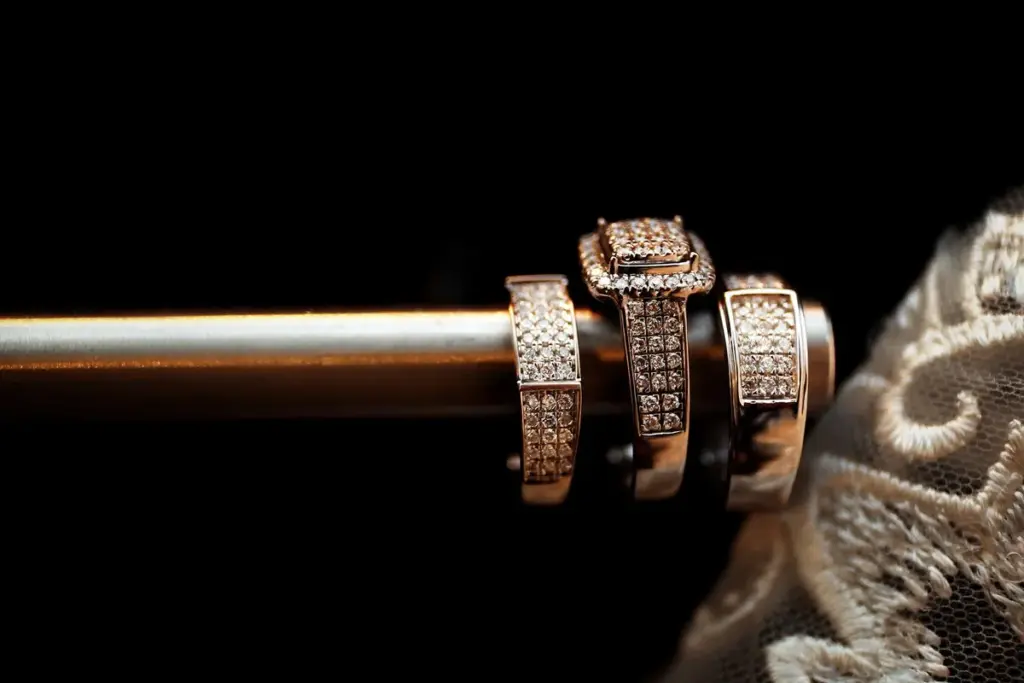
People walk into appointments with jewelry buyers carrying two things: the pieces themselves and a set of assumptions that are almost always wrong. Some of those assumptions cost sellers real money. Others cause them to walk away from fair offers, convinced they can do better at an auction house or online marketplace that will, in practice, charge them 20 to 35 percent in fees before they see a cent. Getting clear on what is actually true about how buyers evaluate and price inherited or older jewelry is worth doing before any conversation starts.
The Myth That Age Alone Makes Something Valuable
Does older jewelry automatically sell for more?
No. Age is not a pricing factor on its own. A piece from the 1940s made with low-grade gold and a synthetic stone may be worth less than a well-made piece from ten years ago set with a strong diamond. What drives value is material content, stone quality, maker, and condition. The Precious Metals Group sees this constantly with clients who arrive expecting a premium simply because a brooch belonged to a grandmother. Sentiment is real. It does not appear on a gram scale or in a grading report.
Certain periods do carry collector interest. Art Deco platinum and diamond work, signed Retro pieces from major houses, Georgian closed-back settings with foil-enhanced stones. Those carry premiums because demand exists for them specifically, not because they are old in a general sense. A buyer who cannot explain exactly why a period piece commands extra money is guessing.
What actually determines the price a buyer offers?
Three things, in order: metal weight and purity, stone grades, and maker attribution. A 14-karat gold chain is priced against the spot market for gold, adjusted for the alloy percentage and the current spread a buyer needs to operate. A diamond is evaluated on cut, color, clarity, and carat. A signed Cartier or Van Cleef piece gets an additional layer of research because the secondary market for signed work runs above melt value. Everything else is noise.
The Myth That Retail Price Is the Starting Point
Why won’t a buyer pay what the jewelry was insured for?
Insurance appraisals are written to replacement value, which is what a retail jeweler would charge to recreate the piece today. That figure has nothing to do with what a buyer can resell the item for. Buyers operate in a wholesale or secondary market. They need room to cover overhead, carry inventory, and eventually sell at a profit. Expecting retail minus a small percentage is a misunderstanding of how the market works, not a sign of a low-ball offer.
The gap between insurance value and buyer offer is often 50 to 70 percent. That sounds alarming. It is actually standard across the industry, in NYC and everywhere else. The Precious Metals Group is direct with clients about this math because confusion at that moment is what causes people to leave and make worse decisions elsewhere.
Is selling at auction a better option for high-value pieces?
Sometimes, for very specific categories. Signed pieces from major houses, rare antique jewelry with documented provenance, or stones above five carats with strong GIA reports can perform well at auction. The tradeoff is time, typically three to six months from consignment to payment, plus buyer’s premiums that reduce net proceeds, plus the risk of a no-sale. For the broad middle range of quality jewelry, a direct buyer transaction closes faster and nets more after fees. Selling diamonds in NYC through a direct buyer is often the cleaner path for stones that are good but not exceptional.
The Myth That Buyers Cannot Evaluate Unusual Materials
Can a jewelry buyer handle platinum pieces, not just gold?
Yes, and platinum evaluation requires a different skill set. The metal tests differently, the alloys vary (950, 900, 850 are common), and the spot price moves independently of gold. Sellers who assume their platinum pieces will be lumped in with gold are sometimes surprised in both directions. Platinum has historically traded at a premium to gold, though that relationship has shifted over time. Selling platinum in NYC to a buyer who actually understands the material is worth the extra step of asking how they test and price it before committing.
The same applies to silver, particularly heavy sterling flatware sets and holloware that families inherit and have no use for. Melt value on a large set can be substantial. A buyer who only handles gold will undervalue it or decline it entirely.
What about pieces that mix materials, like gold with enamel or coral?
Mixed-material pieces are evaluated on their components separately. The gold content is weighed and priced. The enamel, coral, or other decorative elements are assessed for collector interest. Enamel work by known makers, particularly signed Limoges or Faberge-school pieces, carries its own market. Generic enamel on a base-metal brooch adds little. A competent buyer separates those things clearly. The Precious Metals Group handles estate pieces with mixed components regularly, and the evaluation process is transparent: clients see the breakdown by material, not a single unexplained number.
The Myth That You Need Perfect Documentation to Sell
Receipts help. GIA certificates help. Original boxes help. None of them are required. A buyer who refuses to make an offer without paperwork is either inexperienced or stalling. The piece itself carries all the information needed: the metal tests under a spectrometer or acid, the stone grades under a loupe, the hallmarks confirm the maker. Documentation can support a higher offer for signed or certified pieces, but absence of paperwork does not reduce melt value by a single gram.
Sellers in the Columbus Circle area and across NYC often inherit jewelry with no records at all, sometimes from relatives who purchased abroad or decades before documentation was standard practice. That is a normal situation, not a problem that disqualifies a sale.
For anyone ready to move forward, The Precious Metals Group operates as a trusted jewelry buyer resource in NYC, with direct experience across gold, platinum, diamonds, silver, and signed pieces of all periods. The office is at 30 W 47th St Suite 906, 9th Floor, New York, NY 10036. Reach them at (212) 840-0415.
Frequently Asked Questions
What should I prepare before selling my jewelry?
While documentation like receipts or GIA certificates can help, they are not required to sell your jewelry. The buyer will evaluate the piece based on metal tests, stone grades, and hallmarks, so having the items ready for assessment is the most important preparation.
How does a jewelry buyer determine the value of my piece?
A buyer evaluates jewelry based on three main factors: metal weight and purity, stone grades, and maker attribution. For example, a 14-karat gold chain will be priced according to the current gold market, while diamonds are assessed on cut, color, clarity, and carat weight.
Why won’t a buyer pay the retail price for my jewelry?
Insurance appraisals reflect replacement value, which is typically much higher than what a buyer can resell the piece for in the wholesale market. The gap between insurance value and the buyer’s offer can be 50 to 70 percent, as buyers need to cover their overhead and make a profit.
What are common mistakes people make when selling jewelry?
A common mistake is assuming that age alone makes a piece more valuable; it does not. Sellers often overlook that the quality of materials and the piece’s condition play a far more significant role in determining its worth.
Get Directions to The Precious Metals Group
🎧 Listen to this as a podcast
Also on Apple Podcasts, Spotify, and Amazon Music.
The Precious Metals Group buys gold, silver, platinum, diamonds and luxury watches at 30 W 47th St, Suite 906, in the Diamond District — walk-ins weekdays 10am to 6pm. See what we pay for gold.